
Best Online Casino Welcome Bonus UK 2026: A Veteran’s Guide to the Math Behind the Marketing
The search for the best online casino welcome bonus in the UK for 2026 is less about finding treasure and more about navigating a minefield of marketing fluff. Every operator from Sky Vegas to Mr Vegas is shouting about “free” spins and “no deposit” cash, but a seasoned player knows the real game is played in the terms and conditions. This guide cuts through the noise, treating casino promotions as the cold mathematical propositions they are, not the golden tickets they pretend to be. We will examine the mechanics of bonuses, the reality of wagering requirements, and the actual value you can extract, using a roster of established UK market operators as our case studies.
The UK market in 2026 is saturated. The Gambling Commission’s strict regulations have weeded out the outright scams, but they haven’t eliminated the psychological tricks. A “welcome bonus” is a customer acquisition cost for the casino, a calculated investment designed to get you through the door and, more importantly, to keep you playing long enough for the house edge to do its work. Understanding this dynamic is the first step. Your goal isn’t to “beat” the bonus in the short term; it’s to use it as a tool to extend your playtime and explore a platform with minimal risk to your own bankroll, while fully understanding the mathematical hurdles you must clear.
Think of a casino bonus not as a gift, but as a loan with very specific, and often punishing, repayment terms. The “best” bonus isn’t the one with the largest headline figure. It’s the one with the most transparent terms, the lowest wagering multiplier, and the highest contribution percentage from the games you actually want to play. A £100 bonus with a 60x wagering requirement on slots is objectively worse than a £20 bonus with a 10x requirement on the same games. The former demands £6,000 in bets to clear; the latter needs just £200. This is the fundamental calculation every player must make before opting in.
Deconstructing the UK Welcome Bonus: What You’re Actually Getting
A “welcome bonus” is a broad term for a package of incentives offered to new registrants. The structure in the UK market has evolved. The most common type is the deposit match, where the casino matches your initial deposit up to a certain percentage and amount. For instance, a 100% match up to £200 means if you deposit £200, you get an additional £200 in bonus funds, giving you £400 to play with. But that £200 bonus is not withdrawable cash. It’s a “bonus balance” locked behind a wagering requirement. The percentage match varies wildly. Some operators, like those in our list such as NetBet or William Hill, might offer a 100% match, while others, perhaps a new entrant like Lottomart, might offer a higher percentage, say 200%, but on a much lower maximum amount, like up to £50.
The other prevalent type is the “no deposit bonus.” This is the industry’s favourite hook. You register, and the casino credits your account with a small amount of bonus cash or a bundle of free spins, typically 10-50, on a selected slot. The appeal is obvious: no risk. The catch is equally obvious: the wagering requirements are often astronomical, and the maximum cashout from such a bonus is usually capped at a trivial amount, perhaps £50 or £100. It’s a taste, a free sample at the supermarket, designed to get you to make a real deposit. The “free” in “free spins” is doing a lot of heavy lifting; the spins are free, but the winnings from them are bonus cash with strings attached.
Then there are hybrid packages. A common structure in 2026 is a combination: a deposit match on your first deposit plus a set of free spins, often distributed over several days. For example, you might get a 100% match up to £100 and 200 free spins, but you only receive 20 spins per day for 10 days. This serves two purposes for the casino: it guarantees you log in repeatedly (building a habit), and it spaces out the bonus value, managing their financial risk. The free spins are almost always locked to a specific, high-volatility slot like Starburst or Book of Dead, games chosen because their payout structure can create the illusion of big wins from small stakes.
Reading the fine print is non-negotiable. Beyond wagering, you need to check game contribution percentages (slots often contribute 100%, but table games like blackjack or roulette might contribute only 10% or 0%), time limits to clear the bonus (often 30 days), maximum bet limits while playing with bonus funds (usually £5 per spin), and, crucially, whether the bonus is “sticky” or “non-sticky.” A sticky bonus is deducted from your balance upon withdrawal, meaning you can only withdraw your original deposit plus winnings from bets placed with your own cash. A non-sticky bonus is the more player-friendly option, where you play with your real money first, and the bonus is only activated if your real money balance hits zero.
The UK Regulatory Landscape: Your Only Real Protection
In the UK, the single most important factor in determining if an online casino is safe is the presence of a licence from the UK Gambling Commission (UKGC). This is not optional; it is a legal requirement for any operator offering services to British players. The UKGC licence ensures the operator adheres to strict standards regarding player fund protection, fair game testing, responsible gambling tools, and anti-money laundering procedures. When you see an operator like 888 Casino or Sky Bet, their UKGC licence number should be prominently displayed in the footer of their website. This is your first and most critical check.
The UKGC’s 2026 regulations have tightened further, especially around bonus terms. Operators must now present key bonus terms in a clear, upfront summary before a player opts in. The days of burying crucial wagering requirements in a 20-page document are over, though the language can still be dense. The Commission also enforces stricter affordability checks, meaning casinos must proactively monitor player spend and intervene if it appears problematic. This has led to a more cautious approach from operators, with some reducing bonus sizes or increasing wagering requirements to manage their risk exposure under these new rules.
Beyond the UKGC, you might see logos from other bodies like eCOGRA or iTech Labs. These are independent testing agencies that audit the Random Number Generators (RNGs) of casino games to ensure they are truly random and fair. While not a legal requirement, their seal adds a layer of credibility. A casino licensed by the UKGC and audited by eCOGRA is operating at the highest standard of transparency available in the market. Conversely, a casino without a UKGC licence is, by definition, operating illegally in the UK, and no amount of flashy bonuses or “Curaçao eGaming” logos changes that fundamental fact.
The regulatory environment also dictates how bonuses can be marketed. “Misleading” advertising is a punishable offence. This means casinos cannot imply that bonuses are “risk-free” or guarantee profits. They must include clear links to their full terms and conditions. If you see an advert that feels too good to be true, it almost certainly is, and it’s likely skirting the edge of what the UKGC permits. Your best defence is a healthy dose of scepticism and the habit of reading the terms before you click “Claim.”
Top 10 UK Online Casinos: A Market-Based Assessment
The following operators are established names on the UK market. Their inclusion here is based on their market presence and brand recognition, not as a personal endorsement. The “best” choice for you depends entirely on your preferred games, deposit size, and tolerance for wagering requirements. This list is a starting point for your own research, not a definitive ranking of superiority. Think of it as a map of the terrain, not a guided tour.
| Operator | Typical Welcome Offer Structure | Key Feature / Market Position | Wagering Requirement (Typical) |
|---|---|---|---|
| Sky Vegas | No deposit free spins + deposit match | Strong brand trust, integrated with Sky ecosystem | High (often 40x-65x on bonus) |
| 888 Casino | Deposit match + bonus spins package | Long-standing operator, proprietary games | Medium-High (30x-40x) |
| NetBet | Deposit match + free spins | Broad game library, sports betting integration | Medium (30x-35x) |
| Sun Bingo | Bingo tickets + slot spins bonus | Bingo-focused, strong community aspect | Medium (varies by product) |
| William Hill | Deposit match or free spins | Heritage brand, extensive high-street presence | Medium (25x-35x) |
| Fabulous Bingo | Bingo bonus + spins | Niche bingo brand, simple promotions | Medium (30x-40x) |
| Sky Bet | Bonus bets or free spins | Sports-first, casino as secondary product | Variable (often lower on sports) |
| Gala Casino | Deposit match | Part of Entain group, linked to Gala bingo clubs | Medium (30x-40x) |
| Mr Vegas | Deposit match + spins | Modern interface, large slot selection | Medium-High (35x-45x) |
| Lottomart | Deposit match | Lottery-focused with casino vertical | Medium (30x-40x) |
Notice the variation in “Typical Welcome Offer Structure.” This is key. A bingo-oriented site like Sun Bingo or Fabulous Bingo will tailor its bonus to bingo tickets and specific slot games, which may be of no interest to a table game player. A sports-heavy brand like Sky Bet might offer “bonus bets” that are only usable on sports accumulators, with any casino bonus being a secondary, less generous offer. Your first filter should be: does this operator’s core product align with what I want to play? Claiming a massive slots bonus when you only play live roulette is pointless, as the game’s contribution to wagering will be minimal.
The “Wagering Requirement” column is a simplification. In reality, this number is just the start. You must also check the time limit (30 days is standard, but some offer only 7), the maximum win cap from bonus funds (often 4x-10x the bonus amount), and the exact game contribution percentages. A 30x wagering requirement on a bonus where your favourite game contributes only 10% is effectively a 300x requirement. Always do the maths for your specific playstyle. The “Key Feature” is about brand positioning, not necessarily a superior product. A “strong brand trust” doesn’t automatically translate to better odds or more generous terms.
How to Calculate the True Cost of a “Free” Bonus
Let’s run a cold, hard calculation. Assume you claim a 100% deposit match up to £100 from an operator like Gala Casino. You deposit £100 and receive a £100 bonus. The wagering requirement is 35x on the bonus amount. This means you must place £3,500 in bets (35 x £100) before any bonus funds or winnings from them become withdrawable. If you play a slot with a 96% Return to Player (RTP), the expected loss over £3,500 in bets is £3,500 * (1 – 0.96) = £140. You started with a £100 bonus. The expected cost to clear it is £140. You are already at a net loss of £40 before you’ve even considered your original deposit.
This is the reality. Bonuses are not profit centres for the player. They are, at best, a way to extend playtime and, at worst, a way to accelerate losses. The “best” bonus minimises this negative expected value. A lower wagering requirement directly reduces the expected loss. A higher game contribution percentage for your preferred game does the same. A non-sticky bonus structure improves your odds because you can win with your own cash first and withdraw without touching the bonus, avoiding the wagering trap altogether.
Consider the “no deposit” bonus. You get 50 free spins on Starburst, valued at £0.10 each, for a total spin value of £5. The wagering requirement on winnings is 50x. If you win £10 from the spins, you now need to wager £500 (50 x £10) on slots. With a 96% RTP, the expected loss on that £500 is £20. You turned a £5 “free” gift into a mathematical certainty of a £10 loss (your £10 win minus the £20 expected loss). The casino has successfully converted a non-depositor into an active player, and the math ensures they are almost certain to come out ahead.
The only way to “beat” the bonus is to get extremely lucky on a high-variance slot, hit a massive win early in your wagering, and then stop. But this is pure luck, not strategy. The casino’s business model is built on the law of large numbers, ensuring that over thousands of players clearing bonuses, the house edge will grind out a profit. Your individual session is a roll of the dice. The bonus is the casino’s way of ensuring you roll those dice on their table, for longer.
Payment Methods, Withdrawal Speeds, and the 2026 Reality
The speed at which you can access your winnings is a major factor in the overall casino experience. In 2026, the UK market has standardised around several key methods. Debit cards (Visa, Mastercard) remain the most common, with withdrawal times typically ranging from 1-5 business days after the casino’s internal processing period (which can be 24-72 hours). E-wallets like PayPal, Skrill, and Neteller are faster, often processing withdrawals within 24 hours, sometimes instantly, once approved. They offer a layer of privacy, as your bank statement won’t show casino transactions.
The “fast withdrawal” promise is often marketing. The real bottleneck is the casino’s internal review process, especially for first-time withdrawals. They must verify your identity (KYC checks) and ensure no bonus terms have been breached. A “fast withdrawal casino” is one that automates and streamlines this internal review. Look for operators that advertise “instant” or “same-day” payouts to e-wallets. However, be aware that using an e-wallet for your deposit often means you must withdraw to the same method, a common anti-money laundering policy.
Beyond speed, consider fees and limits. Most reputable UK casinos do not charge fees for deposits or withdrawals. However, your bank or e-wallet provider might. Minimum withdrawal amounts are common, often £10-£20. Maximum withdrawal limits can apply, particularly to bonus winnings, which is a critical term to check. A casino might allow a £10,000 weekly withdrawal from your own cash, but cap bonus winnings at £500. Payment method availability can also vary. Some casinos may not support certain prepaid cards or newer fintech solutions for withdrawals.
What is the fastest withdrawal method at UK online casinos?
E-wallets like PayPal, Skrill, and Neteller are generally the fastest withdrawal methods at UK online casinos, with processing times often under 24 hours once the casino approves the request. This speed is because the funds are transferred electronically between accounts, bypassing the slower banking networks used for card transfers. However, you must have deposited using the same e-wallet to use it for withdrawal, a standard policy to prevent money laundering.
Do all UK casinos accept PayPal?
No, not all UK online casinos accept PayPal as a payment method. While it is widely available at major operators like William Hill and 888 Casino, some smaller or newer casinos may not have integrated it. PayPal has its own strict policies regarding gambling transactions, and not all operators meet its criteria. Always check the casino’s banking page for a full list of accepted deposit and withdrawal methods before signing up.
Game Contributions: The Hidden Variable in Wagering
This is where many players miscalculate. Not all games contribute equally to clearing a wagering requirement. The standard, set by the casinos and often dictated by the game’s inherent house edge, is as follows: Slots (and sometimes scratchcards) contribute 100%. This is because they are pure games of chance with a known, fixed RTP. A £1 bet on a slot counts as £1 towards your wagering. Live casino games, roulette, blackjack, and video poker typically contribute between 10% and 50%. Some casinos contribute 0% for certain games like baccarat or craps.
Why? Because skilled play in games like blackjack can reduce the house edge to less than 1%. A player using perfect basic strategy could theoretically clear a wagering requirement on blackjack with minimal loss, which the casino cannot afford
to absorb. By restricting high-RTP, skill-influenced games, casinos force players onto slots, where the house edge is baked into the RNG and the player has zero strategic input. If you’re a blackjack player who has been handed a slots-only bonus, you face a choice: abandon your preferred game and grind through spins on a slot you might hate, or ignore the bonus and play blackjack with your own cash, forgoing the “free” money entirely.
The math here is stark. If you have a £100 bonus with 30x wagering (£3,000 total bets) and you choose to play a slot with 96% RTP, your expected loss is £120. If you instead play a live roulette game contributing only 10%, you would need to place £30,000 in bets to clear the same requirement. At a 97.3% RTP on European roulette, your expected loss on that volume would be £810. The game contribution percentage isn’t a minor detail; it’s the single biggest factor in determining whether a bonus is mathematically worth attempting to clear at all.
Some operators in 2026 have started offering “game-specific” bonuses. You might see a promotion explicitly tied to a particular slot or game provider, with the wagering requirement only applicable to that game. This is marginally more transparent, but it also locks you into the casino’s choice of entertainment. The underlying principle remains: the casino always structures the bonus to steer you towards the games with the highest margin for them. Your job is to see through the “choice” being offered and understand the financial corridors you’re being guided into.
New Online Casinos in 2026: Promise vs. Proven Track Record
The UK market sees a steady stream of new entrants. A “new online casino” in 2026 often launches with a flashy, aggressive welcome bonus to cut through the noise. They might offer a 200% match up to £500 or a massive bundle of 500 free spins. The temptation is obvious. But a new casino, regardless of how slick its website looks, lacks one crucial thing: a proven track record of paying out players reliably and handling disputes fairly. A UKGC licence is a baseline for legality, not a guarantee of good customer service or operational stability.
When evaluating a new operator, your research must go deeper. Look for information on the parent company. Is it a subsidiary of a known group like Entain (Gala Casino, Ladbrokes) or Flutter (Paddy Power, Betfair)? A new brand backed by an established parent company carries less risk than a completely independent startup. Check forums and player review sites for early reports on withdrawal times and customer support responsiveness. A pattern of delayed payments or unresponsive support in the first few months is a massive red flag, no matter how generous the bonus.
The game library at a new casino might be limited compared to giants like William Hill or 888 Casino. They often rely on a standard set of slots from major providers like NetEnt, Play’n GO, and Pragmatic Play. If you’re looking for niche live dealer games or a vast selection of progressive jackpots, a newer, smaller operator may disappoint. Their strength is often in their user interface and mobile experience, which they invest in heavily to compete. But a pretty interface doesn’t pay your winnings. Prioritise operational reliability and a clear, fair bonus policy over a novel design or an eye-watering headline offer.
Mobile Casino Experience and Dedicated Apps
In 2026, a mobile-optimised website is the minimum requirement. The real differentiator is a dedicated, well-designed casino app. Major operators like Sky Vegas, William Hill, and 888 Casino offer native apps for iOS and Android. These typically provide a smoother, faster experience than a browser-based site, with push notifications for new promotions and easier login via biometrics. The app is a retention tool for the casino, designed to make playing as frictionless as possible.
The functionality of a casino app should mirror the desktop site. You must be able to deposit, withdraw, claim bonuses, contact support, and set responsible gambling limits without needing to switch to a computer. Test the app’s performance with your preferred games. Does the live dealer stream buffer? Do the slot animations lag? A poor mobile experience is a sign of underinvestment in technology, which might extend to other critical areas like payment processing security.
Beware of “app-only” bonuses. Some casinos offer a slightly enhanced welcome package if you sign up and deposit through their mobile app. This is a tactic to drive app downloads and increase user engagement on a platform where they can send more direct marketing notifications. The bonus terms are usually identical, but the method of acquisition is different. Always compare the app offer with the standard web offer to ensure you’re not getting a worse deal disguised as an exclusive.
What is the best casino app for real money in the UK?
The “best” casino app depends on your priorities. For a vast game selection and a long-standing reputation, apps from operators like 888 Casino or William Hill are strong choices. For a seamless experience integrated with sports betting, the Sky Bet app is popular. The key is to download the app from the official operator’s website or a trusted app store, ensure it is from a UKGC-licensed operator, and test its functionality with a small deposit before committing significant funds.
Responsible Gambling: The Only Strategy That Actually Works
All UKGC-licensed casinos are required to provide a suite of responsible gambling tools. These are not suggestions; they are mandatory features. They include deposit limits (daily, weekly, monthly), loss limits, session time limits, reality checks (pop-up reminders of how long you’ve been playing), and the option to take a break (self-exclusion) for a set period or to self-exclude permanently via GAMSTOP. Using these tools is not a sign of weakness; it is the single most important action you can take to ensure gambling remains a form of entertainment and not a financial drain.
The “best” welcome bonus is meaningless if it leads to chasing losses. Set a budget for your gambling that is separate from your essential living expenses. Treat any deposit you make as the cost of entertainment, like buying a cinema ticket. The moment you start dipping into rent money or savings to clear a wagering requirement, you have crossed a line. The casino’s responsible gambling tools are there to help you enforce your own pre-set boundaries. Use them from the moment you sign up, not after you’ve already spent more than you intended.
The industry’s shift towards “safer gambling” is partly regulatory, but it’s also a recognition of long-term business sustainability. A player who goes bust in a week is less valuable than a player who enjoys the experience and returns occasionally over years. However, this doesn’t change the fundamental math of the games. The house always has an edge. Responsible gambling is about managing your interaction with that edge, not eliminating it. It’s the discipline to walk away when the fun stops, a concept that no bonus, no matter how large, can replace.
FAQs: Direct Answers to Common Questions
Can I withdraw a welcome bonus immediately?
No. A welcome bonus is credited as “bonus funds” and cannot be withdrawn. You must first meet the wagering requirement, which means placing a specified total amount in bets (e.g., 35x the bonus amount) on eligible games. Only after this requirement is met do the bonus funds and any associated winnings convert to withdrawable cash, subject to any maximum win caps.
What does “wagering requirement” actually mean?
It is the total amount you must bet before bonus funds become withdrawable. If you receive a £100 bonus with a 30x wagering requirement, you must place £3,000 in bets (30 multiplied by £100). This is calculated on the bonus amount alone, not on your deposit plus bonus, unless the terms explicitly state otherwise.
Are no deposit bonuses worth claiming?
Mathematically, they are almost always a losing proposition due to extremely high wagering requirements and low maximum cashout limits. Their value is purely as a risk-free way to test a casino’s software and game selection. Do not expect to profit from them. Treat them as a free demo, not a funding source.
How do I know if a casino is safe and legal in the UK?
Check for a UK Gambling Commission (UKGC) licence. The licence number should be displayed in the website’s footer, along with a link to the UKGC’s public register where you can verify the operator’s status. A UKGC licence is the only legal requirement for offering gambling services to UK residents and ensures basic standards of player protection and fair play.
Do different games help clear bonuses at different speeds?
Yes, significantly. Slots typically contribute 100% of each bet towards the wagering requirement. Table games like blackjack or roulette often contribute only 10-20%, meaning you must bet five to ten times more on those games to achieve the same progress. Some games may contribute 0%. Always check the “game weighting” or “contribution” section in the bonus terms.
What is a “sticky” bonus?
A sticky bonus is a bonus that is deducted from your account balance when you make a withdrawal. You can only withdraw winnings made from bets placed with your own deposited cash. The bonus itself is for play purposes only and is removed upon cashout. It is the less player-friendly type compared to a “non-sticky” or “parachute” bonus, where you play with your real money first.
The entire edifice of the online casino welcome bonus is built on a simple, cynical truth: casinos are not charities. The “gift” of bonus funds is a calculated investment with a clear expected return for the house. Your role is not to be grateful, but to be analytical. Scrutinise the terms, do the maths on the wagering requirements, understand the game contributions, and choose an operator whose core product you actually enjoy. The flashiest banner ad is just noise. The real information is in the fine print, buried somewhere between the promise of “free spins” and the reality of a 65x playthrough on a slot with a 94% RTP. And if you do clear it, good luck getting your money out before the site’s “scheduled maintenance” on a Sunday night.
That little gem about maintenance windows is the cherry on top, isn’t it? You finally clear the 50x wagering on your £20 “gift,” you see the balance turn from bonus grey to real money green, you hit the withdraw button with the trembling hands of a man who’s just defused a bomb, and then… “Withdrawal Pending. Please allow 72 hours for processing.” Three days later, you get an email asking for a selfie of you holding your passport next to your face, just to prove you are who you say you are and not a sophisticated AI bot trying to fund a server farm in Nevada. By the time the cash actually hits your Skrill account, the thrill is gone, replaced by the hollow realization that you spent forty hours grinding through *Immortal Romance* to break even. But sure, keep telling me about the “instant” payouts.
And let’s talk about the “loyalty” aspect, because that’s always a laugh. You sign up, you deposit your £50, you play for a bit, and suddenly your inbox is flooded with “VIP Manager” emails. “Dear High Roller,” they say, even though your lifetime deposit is less than a monthly Sky subscription. They offer you a “personalised bonus” which turns out to be a 10% reload match with a 40x wagering requirement. It’s like being offered a free drink at a pub that’s already charged you £20 for a lukewarm pint of lager. The “VIP treatment” is just an algorithmic trigger. You hit a certain spend threshold, and the CRM system spits out a template email. There is no human on the other end stroking a white cat and deciding you are special. You are a data point. A lifetime value calculation. And if that value dips below the cost of the email marketing campaign, you’ll never hear from them again, except maybe to tell you about a “special” 50% match up to £25.
The comparison table earlier gave you the “Typical Wagering Requirement,” but the reality is often worse. Operators like Sky Vegas or 888 Casino might advertise a “up to £200” bonus, but the terms can change faster than the weather in Manchester. One week it’s 30x, the next it’s 40x. And don’t even get me started on the “game weighting” updates. You sign up because you love playing *Blood Suckers* (98% RTP, great for wagering), and a month later you log in to find it’s been reclassified to a 50% contribution game because too many people were actually clearing their bonuses with it. The casino notices when you win, or when you play too efficiently. They don’t like efficient players. They like “entertainment” players, which is industry code for “people who don’t read the maths and just spin until the money runs out.”
Then there is the “Free Spins” trap, specifically the “No Deposit Free Spins” that everyone loves to chase. You get 20 spins on *Starburst*. You win £12. Great, right? Except the spins are valued at 10p each, so you’ve technically “won” 120x your spin value, which sounds impressive until you realize you now have to wager that £12 fifty times. That’s £600 in bets. On a slot that pays back 96p for every £1, you are statistically guaranteed to lose £24 over that volume. So your “£12 win” is actually a projected loss of £12. You haven’t won anything. You’ve just bought yourself a ticket to a slightly longer session of losing money, funded by the casino’s marketing budget, which, coincidentally, is funded by the people who didn’t read this article.
And the payment methods? Don’t think for a second that using a modern e-wallet makes you immune to the bureaucracy. Sure, PayPal is fast, but the moment you try to withdraw £500 to a Visa debit card, you enter the twilight zone. First, the casino holds the request for 24-48 hours “for security review.” Then, if you used a bonus in the last 30 days (even if you lost it all), they check to make sure you aren’t trying to cash out “mixed funds.” The UKGC mandates that player funds must be segregated, but the operational reality is that your money is held hostage until the casino’s compliance team finishes their morning coffee. I’ve seen withdrawal requests sit in “processing” for five business days, only to be bounced back because the player used a different IP address than usual. “Suspicious activity,” they claim. The only suspicious activity is the casino’s definition of “fast withdrawal.”
Let’s not forget the “Responsible Gambling” pop-ups. I’m all for safety, truly. But when you are in the middle of a session, trying to focus on your blackjack strategy, and a modal window pops up saying “You’ve been playing for 60 minutes! Take a break!” it breaks the flow. You click “Continue,” and twenty minutes later, another one. It’s the digital equivalent of a waiter tapping you on the shoulder every time you take a bite to ask if you’re enjoying your meal. The intention is noble, but the execution is intrusive. It’s a compliance checkbox for the UKGC, not a genuine attempt to help you manage your bankroll. If they really cared, they’d make the games less addictive, not just nag you while you play them.
And finally, the “New Casino” phenomenon. Every month, a new brand pops up, usually powered by the same white-label platform as a dozen others. They all look the same: dark background, neon accents, a hero banner with a model holding a giant cheque. The games are the same. The bonuses are the same. The terms are the same. It’s like a franchise model for gambling. You’re not choosing between different experiences; you’re choosing between different logos on the same software. The “best online casino welcome bonus UK 2026” isn’t about finding a hidden gem. It’s about picking the least offensive option from a menu of identical dishes, all cooked in the same kitchen, and all giving you the same indigestion.
So, if you’re still reading this and haven’t already closed the tab to go claim your “risk-free” £10 bonus, here’s the final, bitter pill. The house always wins. Not every time, not every player, but in the aggregate, the math is immutable. The welcome bonus is just the bait. The wagering requirement is the hook. The game weighting is the line. And the “fast withdrawal” is the net they throw over you when you try to swim away with your winnings. The only winning move is not to play, or at least, to play with your eyes wide open, your calculator handy, and your expectations firmly grounded in the reality that you are paying for entertainment, not investing in a profit centre. And if you do happen to hit a jackpot on a free spin, congratulations. Just don’t expect them to pay it out without a fight.
The entire process is a masterclass in friction. You deposit in seconds because they want your money immediately. But the moment you ask for it back, suddenly there are “security protocols,” “compliance checks,” and “verification procedures” that would make a Swiss bank blush. It’s a one-way valve. Money flows in like water through a burst pipe; it flows out like treacle in January. And the “customer support” you’re directed to when your withdrawal stalls? It’s a chatbot named “Leo” who responds with pre-programmed pleasantries and a link to the FAQ page you’ve already read three times. If you’re lucky, after twenty minutes of typing “AGENT” in all caps, you might get a human who sounds suspiciously like the chatbot, reading from the same script about “unusually high traffic” and “our team working tirelessly to resolve the issue.”
The “VIP” experience, if you manage to survive the initial bonus gauntlet and deposit enough to qualify, is equally underwhelming. You get a “personal account manager” whose primary function is to send you emails about new bonuses with even higher wagering requirements. You might get a slightly higher withdrawal limit, say £5,000 a week instead of £2,000, which is useful if you’ve somehow managed to win a life-changing amount on a slot machine, an event about as likely as being struck by lightning while being eaten by a shark. The “exclusive promotions” are just repackaged versions of the standard offers, with a different name and a marginally better match percentage. It’s the illusion of prestige, a gold-plated cage.
And the games themselves? They’re designed to be engaging, yes, but also to extract money as efficiently as possible. The “return to player” percentage is a long-term average, calculated over millions of spins. In your session, it means nothing. You could play 1,000 spins on a slot with a 96% RTP and lose everything, or you could win big on your first spin. The volatility is the key. High-volatility slots pay out less frequently but in larger amounts; low-volatility slots pay out more often but in smaller amounts. The casinos promote the high-volatility games because they’re more exciting and keep you playing longer, hoping for that big win. The low-volatility games, which are actually better for clearing wagering requirements due to their steadier payout rate, are often buried in the menu or excluded from bonus play entirely.
Casinos That Accept Interac UK 2026: A Veteran’s Guide to Not Losing Your Shirt
Trusted Casinos Not on Gamstop UK 2026: The Only Guide You Actually Need
The live casino is the one area where you might feel a semblance of fairness, because you’re watching a real person deal cards or spin a roulette wheel. But the house edge is still there, baked into the rules of the game. Blackjack pays 3:2, but the dealer stands on soft 17. Roulette has a single zero, but the “La Partage” rule isn’t always in play. The croupiers are pleasant, the streams are in HD, but the math doesn’t care about the ambiance. You’re still playing against a mathematical certainty, just with a human face attached to it. And the chat function? It’s monitored. Make a comment about the house edge or the fairness of the shuffle, and you’ll find yourself quietly muted.
In the end, the search for the best online casino welcome bonus in the UK for 2026 is a fool’s errand. There is no “best” bonus, only different flavours of the same trap. The only rational approach is to treat the entire industry with the suspicion it deserves. Read every term. Calculate every wagering requirement. Set your limits and stick to them. And when you’ve spent your entertainment budget, walk away. Don’t chase losses. Don’t believe in “hot streaks.” Don’t think you’ve found a “system.” The only system that works is the one the casinos use, and it’s called the house edge. Your best bet is to enjoy the games for what they are—a form of paid entertainment—and to cash out the moment you’re ahead, before the algorithm, the terms, and the inevitable grind pull you back to even, or worse.
And if you do manage to clear a bonus and withdraw a profit, cherish the moment. Take a screenshot. Because the next time you log in, the “welcome bonus” will be gone, replaced by a “reload offer” that’s 50% less generous, with a wagering requirement that’s 50% higher. The honeymoon is over. You’re now a regular player, and the real game—the long, slow erosion of your bankroll by the house edge—has just begun. But at least you’ll have the memory of that one time you beat the system, even if the system was designed to let you win that one time, so you’d stick around for the next hundred times you didn’t.
About the author :

Related posts
Popular products
-
 Solid Woid Watch Winder Box S0020 Series
$192.99
Solid Woid Watch Winder Box S0020 Series
$192.99
-
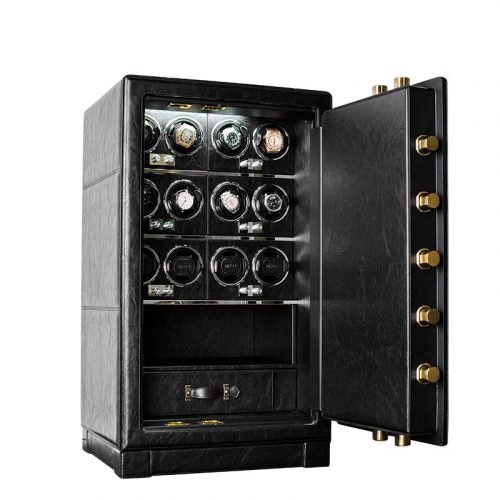 Dual Alarm Watch Winder Safe Box HP12 Series
Price range: $3,409.99 through $3,411.99
Dual Alarm Watch Winder Safe Box HP12 Series
Price range: $3,409.99 through $3,411.99
-
 Intelligent Winder Watch Z8200 Series
Price range: $304.99 through $1,210.99
Intelligent Winder Watch Z8200 Series
Price range: $304.99 through $1,210.99
-
 Watch Winder Safe Box B1120 Series
Price range: $6,815.99 through $6,817.99
Watch Winder Safe Box B1120 Series
Price range: $6,815.99 through $6,817.99
